
 RU
RU AZ
AZ UZ
UZ
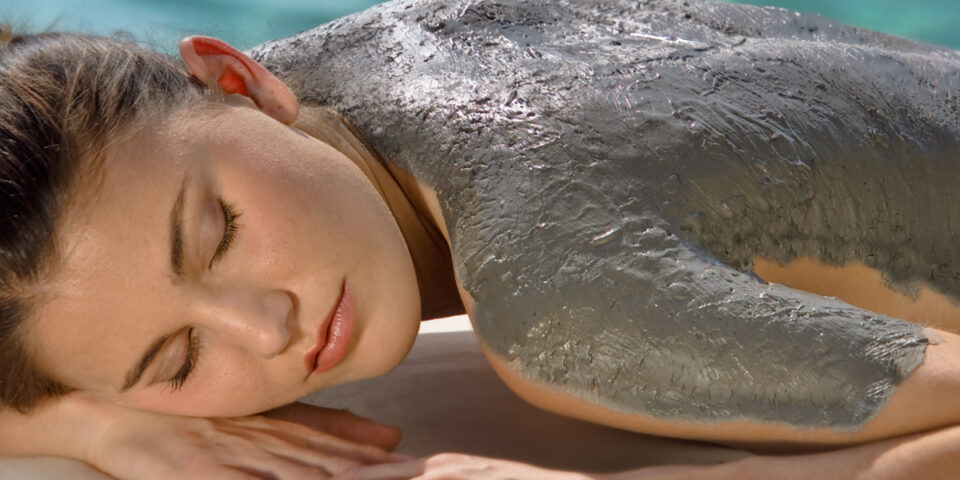
Procedures of volcanic mud baths and applications using sulfur volcanic clay from Azerbaijan, as well as blue and white volcanic clays.

Naftalan White Baths™ “New”
The Russian company AZEICG is a pioneer in Russia in organizing treatment using baths made of white resin-purified Naftalan.
Indications for naftalan treatment
Diseases of the musculoskeletal system
Naftalan in clinical practice
There is abundant evidence of the therapeutic efficacy of dewaxed Naftalan oil and its preparations in the treatment of various diseases.

Brief data from scientific literature
The effect of dewaxed Naftalan on the body is based on the interdependent action of thermal and chemical factors. Dewaxed Naftalan heated to body temperature causes an increase in the temperature of the skin and subcutaneous tissue in the area of application by 1-1.5 °C. As a result, local hyperemia of the skin occurs in the area of exposure.
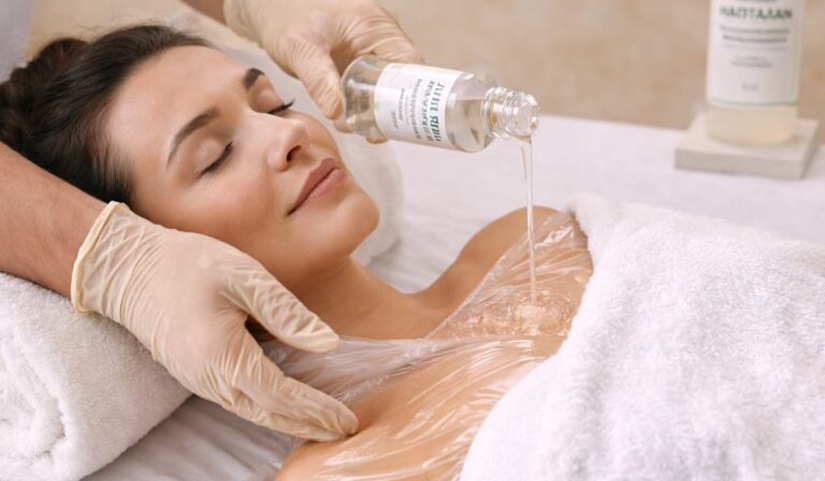
Naftalan oil
Naftalan oil consists of naphthenic hydrocarbons and is an easily accessible substance, obtained by vacuum distillation and hydrocracking from native Naftalan. Its composition contains 99.8% naphthenic hydrocarbons, which have desensitizing, anti-inflammatory, analgesic, wound-healing, antispasmodic, resorptive, antipruritic, and antibacterial effects.
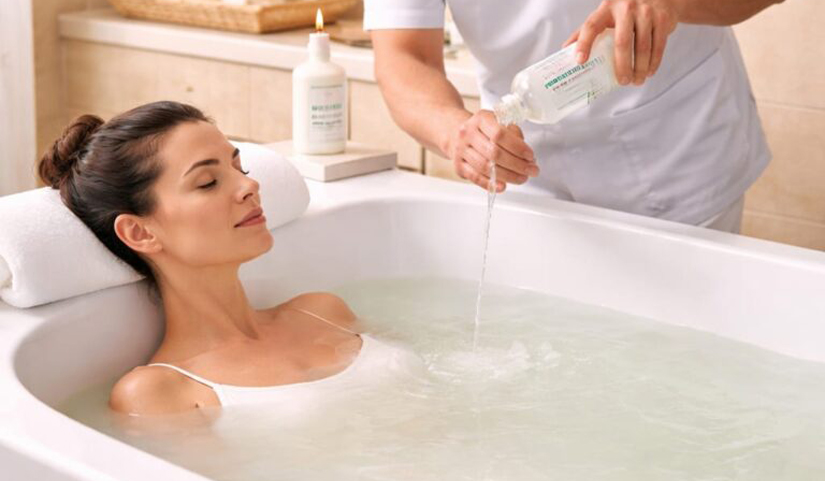
Dewaxed naftalan oil
Dewaxed Naftalan is an easily accessible substance, obtained by vacuum distillation and hydrocracking from native Naftalan oil.
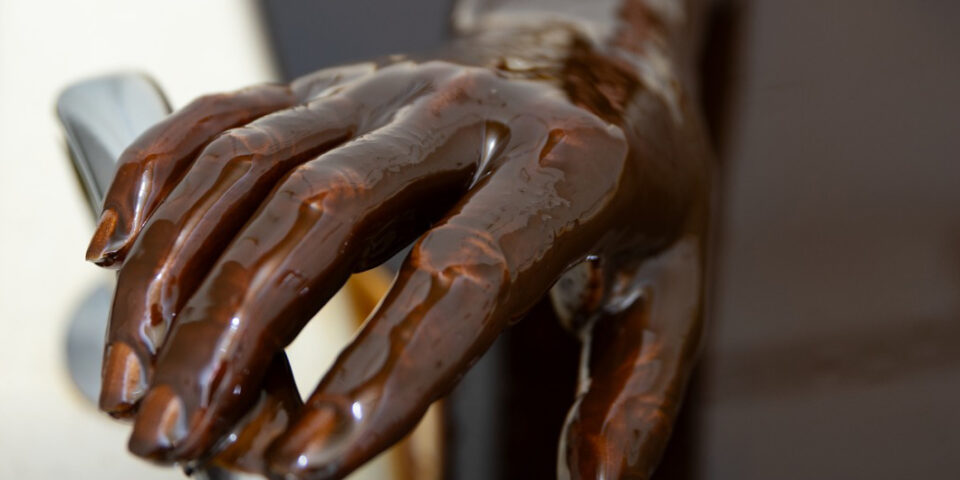
Refined naftalan oil
Refined Naftalan oil must comply with the pharmacopoeial monograph FS 42-1957-82. It is a thick, syrup-like liquid of black color with a greenish fluorescence, having a characteristic odor and a weakly acidic reaction. It does not mix with water. It mixes in all proportions with glycerin, ceresin, oils, fats, paraffin, and wax (SP-X, p. 75). Density is 0.918-0.958 (SP-X, p. 772). The initial boiling temperature must be not lower than 160 degrees Celsius (SP-X, p. 769). Water content is not more than 0.5% (SP-X, p. 772).
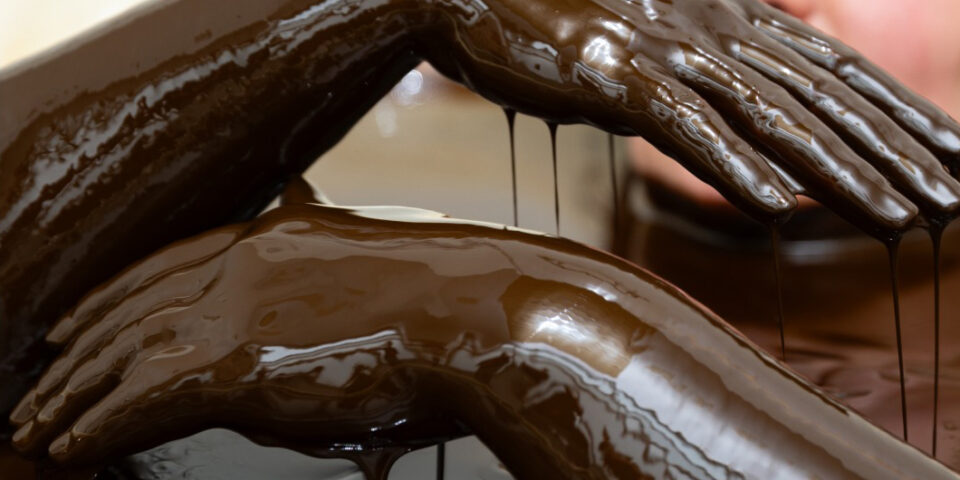
Native naftalan oil
Naftalan is a thick liquid of black-brown or brown color, which in appearance differs little from industrial types of oil. A distinctive feature of naftalan is its high specific gravity (from 0.927 to 0.970), which is обусловлено, firstly, by the insignificant content of light fractions (the level of which in other oils reaches up to 50%), the absence of low-boiling and solid hydrocarbons of the paraffin series, and secondly, by the significant content of naphthenic and aromatic hydrocarbons and resins.
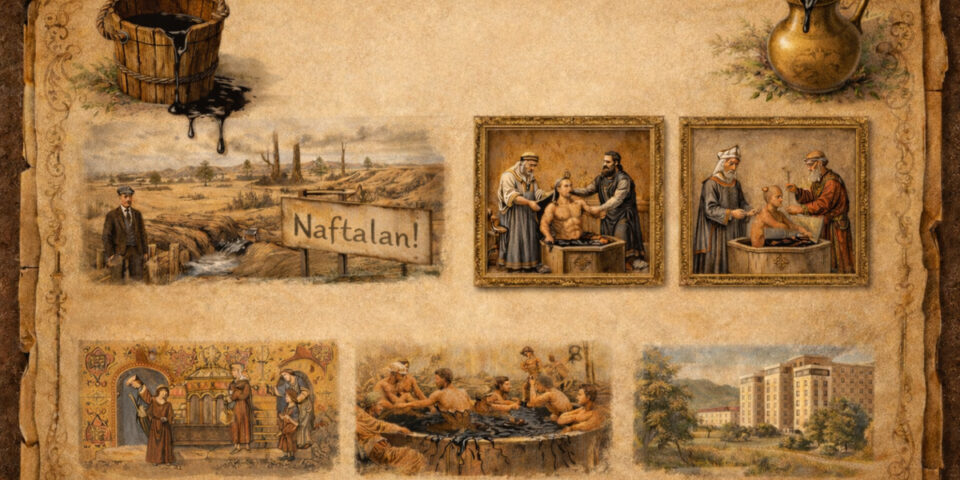
Historical facts
The first mentions of Naftalan are found in the works of the great Azerbaijani poet and thinker Nizami Ganjavi (1141-1201), where he writes about his observations of caravans transporting Naftalan oil from the village of Safi-Kurd, located near the present-day city of Naftalan.